
When Can't a Tire Be Repaired? Sidewalls, Shoulders and Run-Flats
The repairable zone, why sidewalls are off-limits, and what driving on a flat really does.
Repair first, if it's safe
Our rule is simple: if a tire can be safely repaired, we repair it. A good repair costs a fraction of a new tire and gets you back on the road quicker. But some tires can't be saved, and putting a plug in the wrong spot is a risk nobody should take at highway speed.
Here's how to tell the difference, so you know what to expect before we even get there.
The repairable zone: the tread
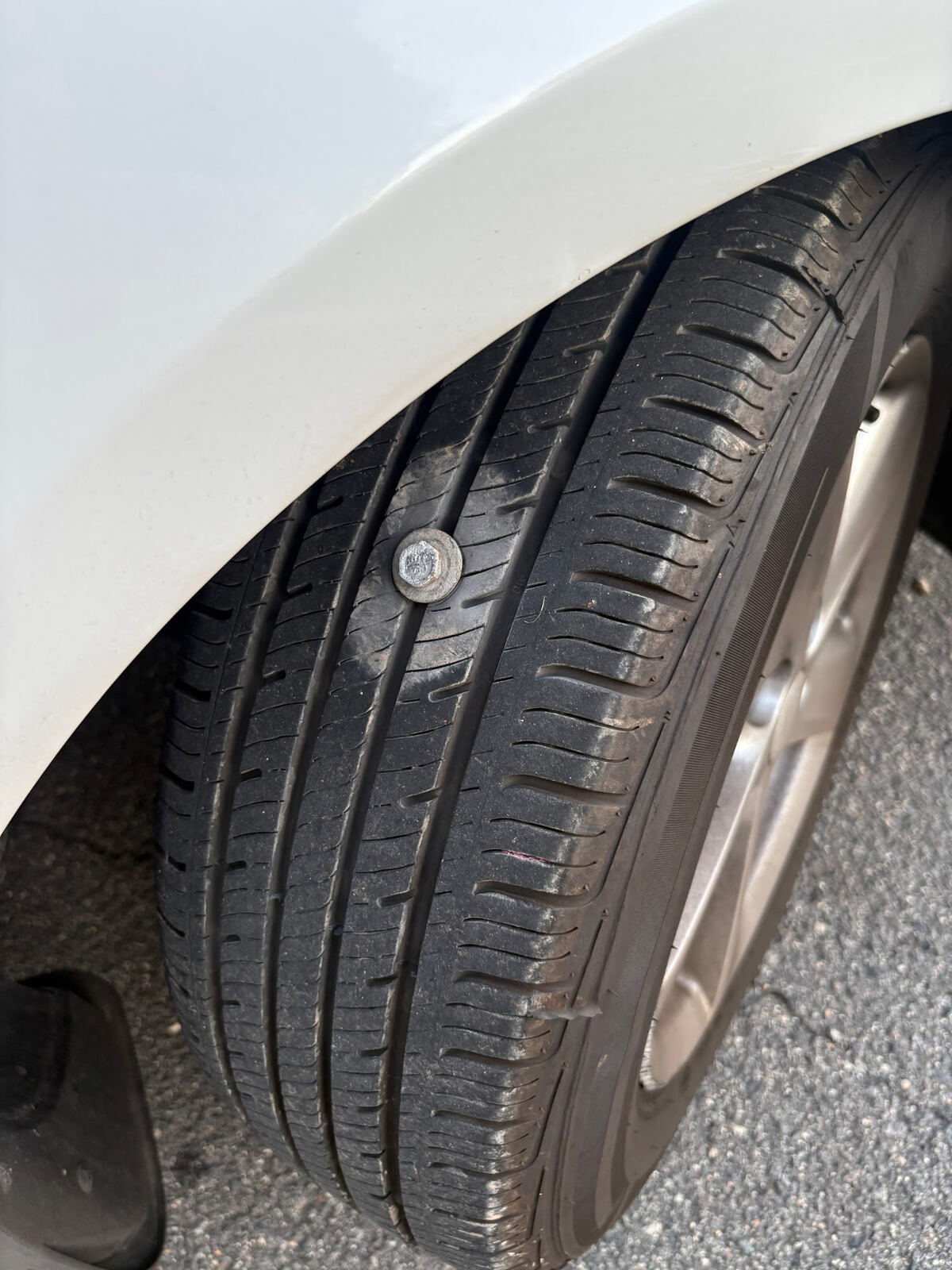
The flat center part of the tire that touches the road is called the tread. This is where nails and screws usually end up, and it's the part that can be repaired. The tread is thick, stiff and doesn't flex much as the tire rolls, so a plug or patch seals well and stays put.
Most tire repairs are done somewhere inside the main tread grooves, away from the edges. If your nail is sitting in the middle of the tire, that's good news.
The shoulder: too close to the edge
The shoulder is where the tread curves down into the side of the tire. It looks like tread, but it behaves more like a sidewall. Every time the tire rolls, the shoulder flexes, and a repair there tends to work loose over time.
A nail right at the edge of the tread is the most common case where people are surprised to hear a tire isn't repairable. It's frustrating, especially when the tire is almost new. But a failed repair at speed is far worse than paying for a new tire.
The sidewall: never repaired
The sidewall is the smooth side of the tire with the size and brand printed on it. It's thin and flexes constantly. Cuts, punctures, bulges or bubbles in the sidewall all mean the tire has to be replaced. A bubble is especially dangerous: it means the inner structure is damaged and the tire could fail without warning.
If you see a bulge on the side of a tire, don't drive on it any longer than you have to. Call for a mobile tire replacement and we'll find a match.
What driving on a flat does
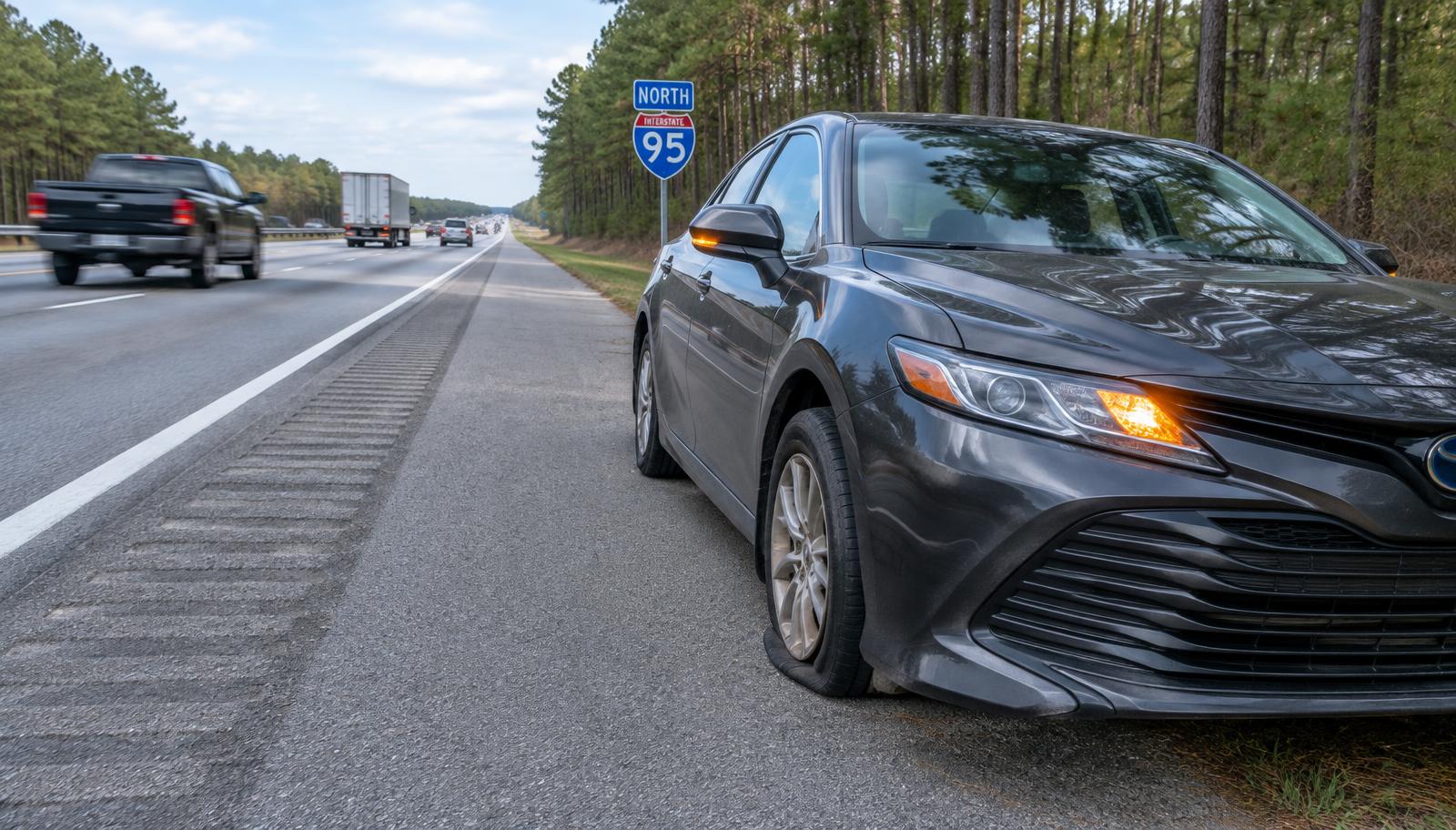
A tire with no air is being crushed between the rim and the road. Drive on it for even a short distance and the sidewalls fold and rub against themselves on the inside. From the outside it can look fine. On the inside, it's chewed up, and that tire is done.
This is why we always say: when you feel a tire go soft, stop as soon as it's safe. The difference between a quick flat tire repair and a new tire is often just a mile or two of driving.
- Rubber dust or shreds inside the tire
- A shiny or creased ring around the sidewall
- Rim marks where the edge pinched the tire
- A tire that won't hold a bead when aired up
Run-flat tires
Run-flat tires have stiff sidewalls that let you drive a limited distance with no air. They're common on some luxury cars and EVs. Whether a run-flat can be repaired depends on how far and how fast you drove on it after it lost pressure, and on the manufacturer's guidance. Some say never repair; others allow it in certain conditions.
If you have run-flats, tell us when you call how far you drove after the warning light came on. We'll give you an honest answer on site.
How many repairs is too many?
Two repairs close together, or a puncture right next to an old plug, usually means it's time for a new tire. Repairs that overlap don't seal reliably. If your tire already has a couple of plugs, expect us to recommend replacement.
Whatever the answer, we'll show you what we see before we do anything, and you'll hear the price first. If it's a tire you can't repair and you're driving on a donut, a spare tire change can bridge the gap. We cover Charlotte, Concord and the rest of our 25-mile radius.
Questions about this
Often not. That area flexes too much for a repair to hold. We'll look and tell you honestly.
Repairs that overlap or sit right next to each other usually mean the tire should be replaced.
It might have. Even a short distance can damage the inside. We'll check for rubber dust and creases before deciding.